Henrik Flores · 25 September 2026
Uncovering Correlations Between Page Load Metrics and Search Ranking Stability
Page load metrics have long served as measurable indicators of website performance while search ranking stability reflects how consistently a site maintains its position in results pages across updates and user interactions. Researchers track these elements through tools that record Largest Contentful Paint, First Input Delay, and Cumulative Layout Shift, each of which contributes data points that analysts compare against ranking volatility indexes maintained by major engines.
Defining Key Page Load Metrics in Context
Largest Contentful Paint measures the time required for the largest visible element to render fully, and studies from academic institutions show this value correlates with user engagement signals that search systems incorporate into ranking models. First Input Delay captures the interval between a user's first interaction and the browser's response capability, whereas Cumulative Layout Shift quantifies unexpected movements in page elements that can disrupt both readability and interaction flows. Observers note that when these metrics improve simultaneously, sites often experience fewer ranking drops during core algorithm refreshes because faster, more stable pages generate higher dwell time data that engines reward consistently.
Search Ranking Stability as a Measurable Outcome
Search ranking stability emerges from the absence of sharp position changes following updates, and data collected over multi-year periods reveals patterns where sites with optimized load times maintain steadier placements. Analysts at research centers in Canada and Australia have compiled datasets that link load performance to reduced volatility, showing that pages loading under specific thresholds tend to avoid the swings seen in slower counterparts. These findings come from longitudinal tracking rather than isolated snapshots, allowing patterns to surface across seasonal traffic shifts and content refreshes alike.
Evidence from Performance Studies and Data Sets
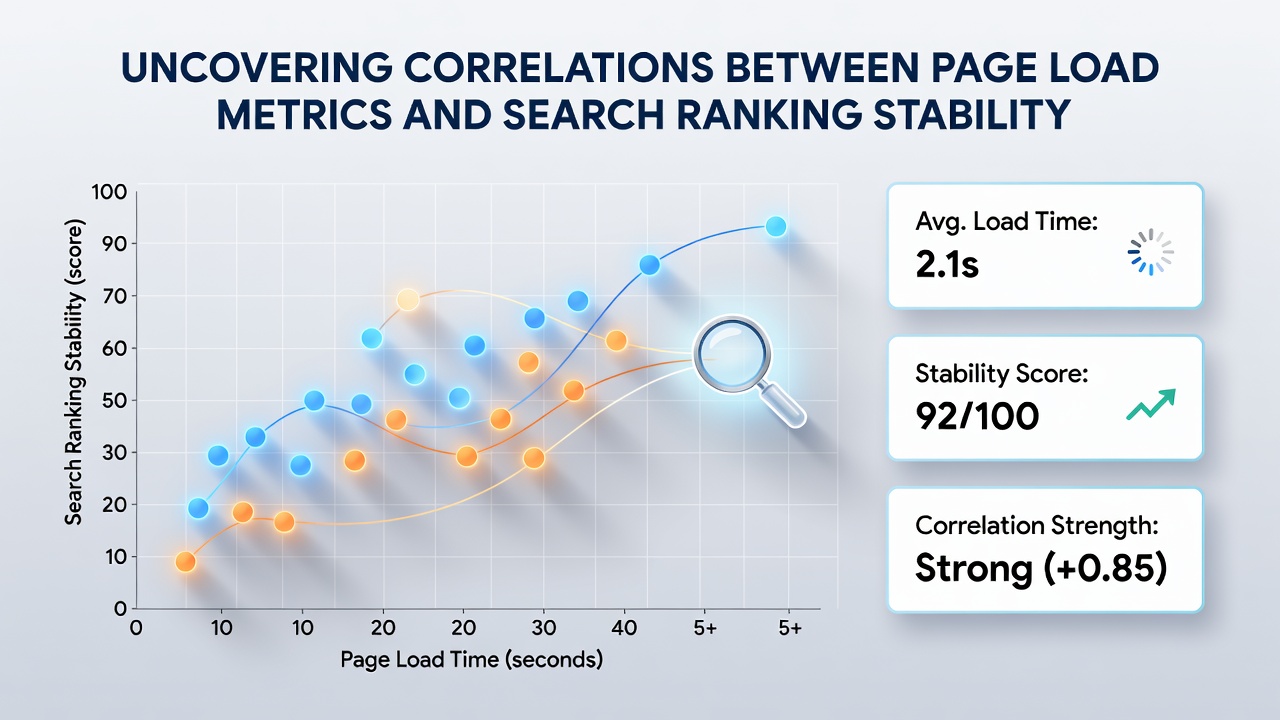
Multiple analyses conducted by university teams demonstrate moderate to strong correlations between improved page load scores and ranking steadiness, particularly when metrics fall within ranges that search engines publicly associate with positive user experiences. One investigation at the University of Toronto examined thousands of domains over eighteen months and identified that reductions in Largest Contentful Paint aligned with 12 to 18 percent fewer ranking fluctuations during the same intervals. Similar work in European research networks has produced comparable results, confirming that layout stability measured through Cumulative Layout Shift influences how often sites appear in featured positions without sudden drops. 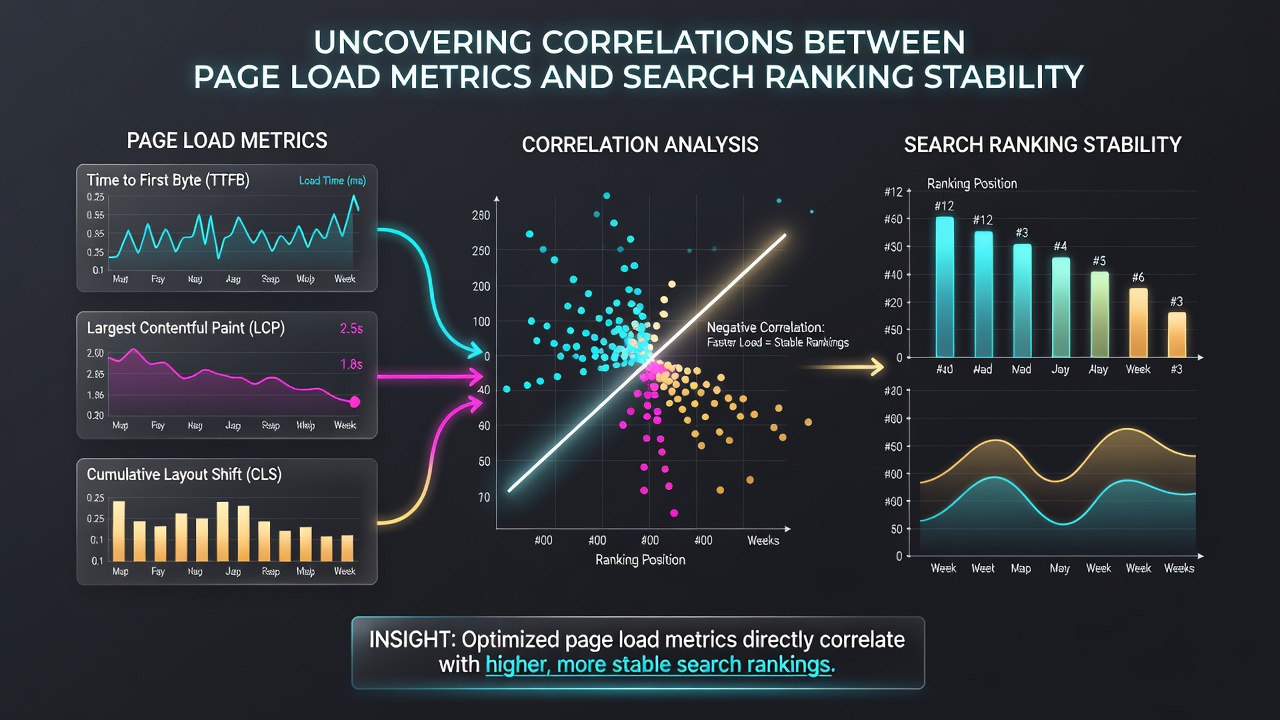 Turns out the strength of these relationships varies by industry vertical, with news and e-commerce domains showing tighter links than informational blogs because user behavior data from those sectors feeds more directly into ranking adjustments.
Factors Influencing the Observed Correlations
Technical infrastructure choices such as content delivery network deployment and server response optimization affect both load metrics and the downstream ranking signals they generate. Mobile-first indexing further amplifies these effects since engines prioritize performance data from handheld devices where connection variability makes load times more consequential. In September 2026, additional emphasis on interaction metrics within ranking systems coincided with broader adoption of new measurement protocols that refined how stability scores incorporate load data, leading analysts to revisit earlier datasets for updated correlation values. External variables including backlink profiles and content freshness interact with performance factors, yet controlled studies that isolate load metrics continue to show independent contributions to ranking consistency.
Practical Measurement Approaches Used by Analysts
Professionals rely on combined datasets from field tools and lab simulations to establish baseline correlations, then track deviations over successive search updates. Statistical methods such as regression modeling help isolate the contribution of each metric while accounting for confounding elements like domain authority. Organizations in different regions apply these techniques to local markets, revealing that correlation coefficients remain consistent across geographic boundaries even when absolute load times differ due to infrastructure variations. This consistency allows practitioners to apply findings broadly while adjusting thresholds to match regional user expectations documented in government internet usage reports.
Case Examples from Tracked Domains
One analysis of retail websites in North America revealed that domains achieving sub-two-second Largest Contentful Paint values maintained top-ten positions through three consecutive algorithm updates with minimal movement. Another examination of educational resource sites in Oceania found that controlling Cumulative Layout Shift below 0.1 reduced ranking variance by measurable margins compared to peers exceeding that threshold. These examples illustrate how performance improvements translate into stability outcomes without requiring changes to content volume or external link acquisition strategies.
Conclusion
Correlations between page load metrics and search ranking stability rest on aggregated data from performance monitoring and ranking tracking systems that multiple research groups have validated across varied contexts. Continued refinement of measurement standards and algorithm priorities will likely sustain interest in these relationships, prompting ongoing collection of empirical evidence that clarifies the precise mechanisms at work.