Drew Foster · 20 November 2026
How Variations in Resource Loading Sequences Affect the Stability of Search Positions for Content-Rich Enterprise Websites
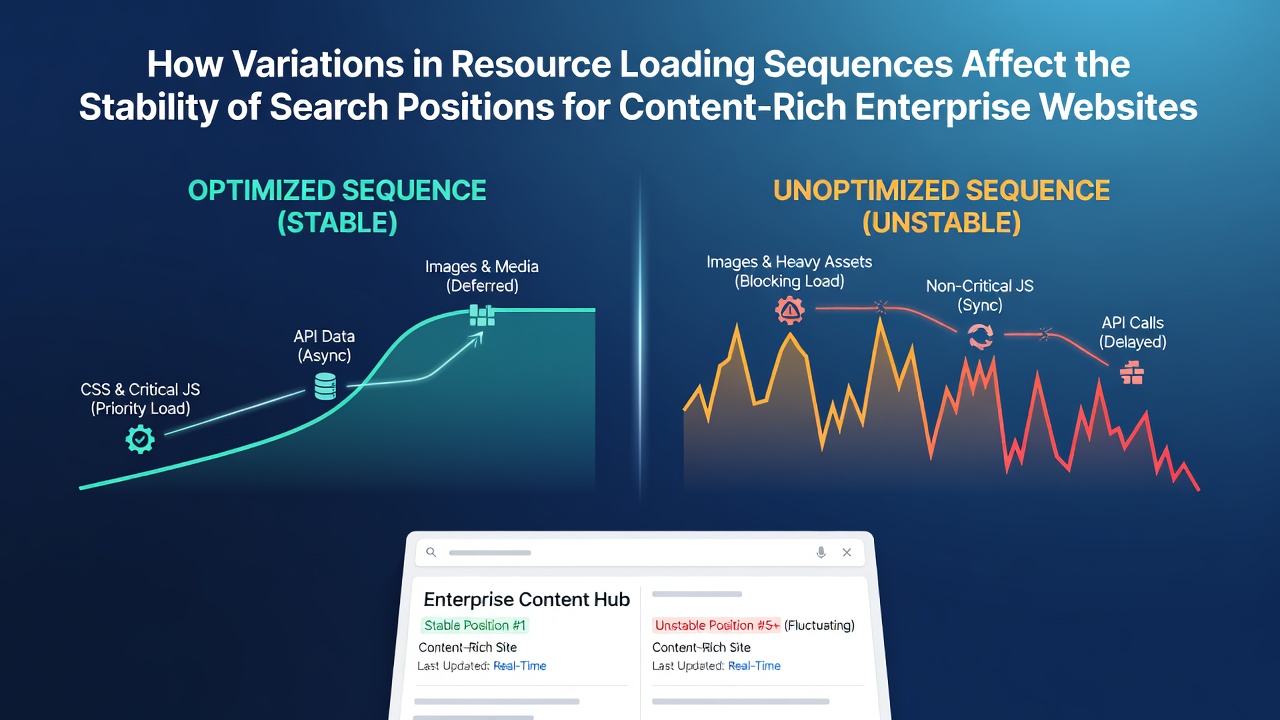
Enterprise websites that publish large volumes of content face ongoing challenges when search engines evaluate page stability over time, adn resource loading sequences play a central role in how consistently those pages maintain their positions. Researchers have documented that the order in which CSS files, JavaScript bundles, images, and API calls load can influence both crawler behavior and the signals that search algorithms use to assess quality and reliability.
Core Mechanics of Resource Loading in Large-Scale Sites
Content-rich platforms typically serve hundreds or thousands of pages daily, each depending on multiple external and internal assets, while variations in loading order determine how quickly a crawler can parse the primary HTML and associated elements. Data from performance monitoring tools shows that when critical CSS arrives before JavaScript, render-blocking decreases and the visible content becomes available earlier, which in turn supports more stable indexing patterns across repeated crawls. Observers note that reversing this sequence often delays full document completion, leading to incomplete snapshots that search systems record during their visits.
Connections Between Loading Order and Index Consistency
Studies conducted by academic teams at institutions such as the University of California have examined how asynchronous versus synchronous loading affects the frequency of content re-crawling on high-volume domains. Results indicate that sites adopting deferred script execution maintain steadier index coverage because crawlers encounter fewer timeout events and encounter fully formed DOM structures more often. In contrast, platforms that load heavy media assets first report higher rates of partial indexing, which correlates with greater fluctuation in search positions for articles and product pages alike.
Rendering Pathways and Their Influence on Ranking Signals
Search engines increasingly incorporate user-experience metrics derived from real-world rendering data, and the sequence of resource delivery directly shapes those metrics. When fonts and above-the-fold images load early, cumulative layout shift values remain lower, producing the kind of stable interaction data that algorithms reward with consistent visibility. Teams managing enterprise news portals have recorded instances where shifting video embeds to later in the load chain reduced unexpected movement and improved session duration figures reported in analytics platforms.
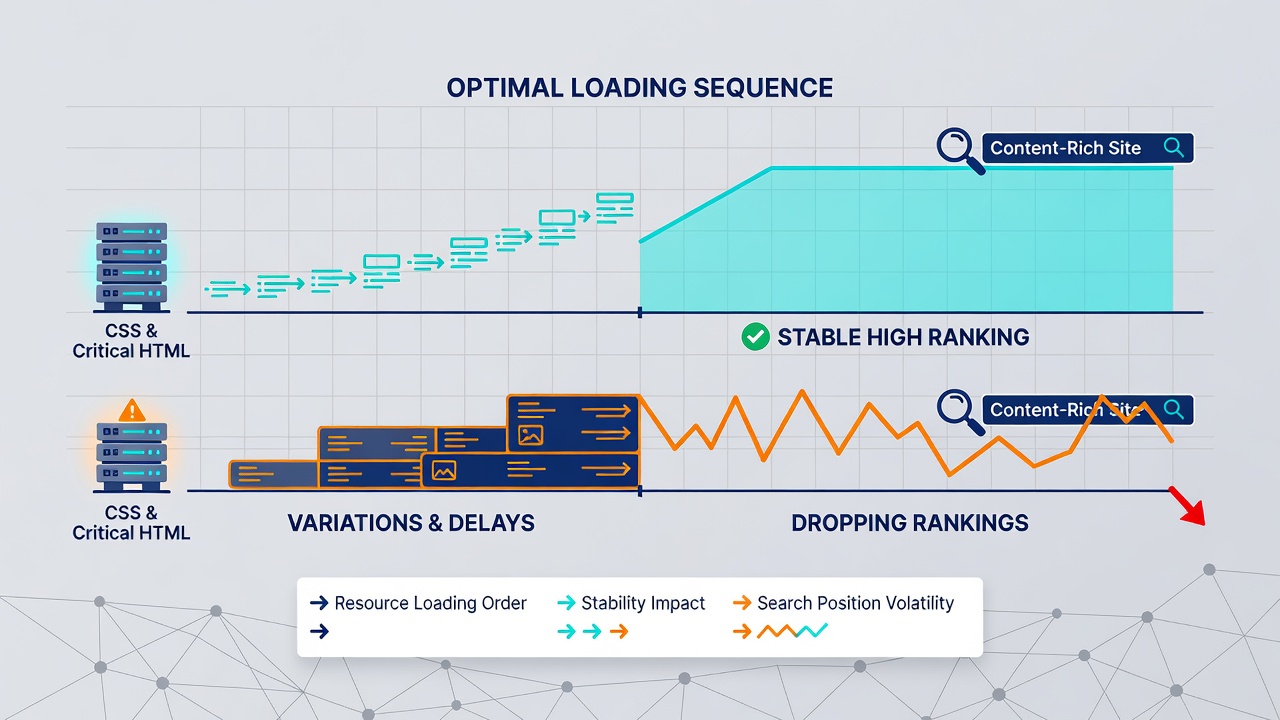
Enterprise platforms that publish multimedia archives frequently adjust their delivery pipelines during peak traffic periods, and evidence from November 2026 monitoring reports shows measurable differences in position retention when these adjustments prioritize textual content over non-essential scripts. Analysts at research organizations such as the World Wide Web Consortium have published guidelines that outline recommended ordering patterns for large documents, emphasizing that predictable sequences reduce the variance observed across successive crawler visits.
Practical Patterns Observed Across Enterprise Deployments
One documented case involved a multinational retailer whose product catalog pages experienced weekly ranking swings until developers reordered font and icon resources ahead of third-party analytics tags. After the change, position variance dropped by measurable margins according to internal tracking, while index freshness metrics improved without additional server capacity. Another enterprise in the financial sector found that loading structured data scripts earlier in the sequence allowed search systems to capture updated schema elements more reliably, resulting in steadier rich result appearances over multi-month observation windows.
Those who manage large content networks continue to test incremental modifications to loading sequences because small shifts in asset priority can produce compounding effects on how consistently pages appear in search results. Figures released by performance research groups reveal that sites maintaining strict control over critical rendering path elements experience fewer instances of temporary de-indexing during algorithm updates compared with peers that allow ad hoc script loading.
Conclusion
Variations in resource loading sequences shape the technical foundation that determines how reliably content-rich enterprise websites retain their search positions. Evidence gathered from multiple monitoring initiatives demonstrates that deliberate ordering of CSS, scripts, and media assets supports more consistent crawler encounters and steadier performance signals. Organizations that systematically refine these sequences continue to record improvements in index stability and reduced fluctuation across their content portfolios.